
Realitychecker offers a new way to tackle disinformation

In today’s digital world, preventing rapidly spreading misinformation and manipulated content has become more critical than ever. It is vital for reporters and citizens to access verified information, protect society from misleading content, and defend the truth. As UCWEP, to overcome these challenges, our council’s Academic Coordinator Assoc. Dr. We are proud to introduce a powerful tool developed by Sefer Darıcı: “Realitychecker” GPT.
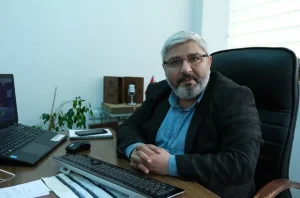
Assoc. Dr. Sefer Darici
“Realitychecker” is an innovative platform equipped with advanced artificial intelligence and visual analysis technologies. This tool has a wide range of capabilities, from being able to detect images created by artificial intelligence to recognizing manipulations made with Photoshop and other editing software. It also makes a significant contribution to the detection and visual verification processes of deepfake videos. “Realitychecker” provides a reliable road map to protect the transparent flow of information and prevent disinformation.
Designed for journalists, this tool was developed with the aim of restoring trust in the digital world. “Realitychecker”, which has the capacity to analyze manipulated images and fake content quickly and effectively, is a solution that can be used not only by professional journalists but also by conscious citizens of the digital age.
As UCWEP, we are pleased to offer this powerful tool to all journalists and the public to ensure the dissemination of verified information, prevent fake news and increase digital transparency. It is now easier to prevent disinformation and build trust in the digital world with “Realitychecker”.
All media workers and citizens, Assoc. Dr. We invite you to use “Realitychecker” developed by Sefer Darıcı. It is our common responsibility to access real information and ensure that society is fed with accurate news.
INFORMATION NOTE
RealityChecker: Reality Keeper for the Digital Age
In the digital world where visual content spreads rapidly, it is becoming increasingly difficult to understand whether an image is real or artificially produced. Nowadays, there is a lack of trust in the accuracy of every photo, video or GIF shared on digital platforms. Developed to meet this need, RealityChecker aims to ensure digital security by offering advanced analysis methods that detect artificial intelligence-generated content and digital manipulations. This versatile and advanced analysis platform offers its users the assurance of accurate information and is constantly updated with professional research.
In-Depth Analysis with Strong Technological Infrastructure
RealityChecker uses comprehensive analysis techniques to understand whether digital images have been edited by artificial intelligence or manually. While it offers quick solutions to users’ verification requests, it can also prepare professional-level reports with tools that can detect complex manipulations. Here are some important analysis techniques that RealityChecker offers:
- Light Modeling and Shadow Mismatch Detection: RealityChecker analyzes the light and shadow pattern in digital images. Shading or lighting irregularities that do not match the angle of light on an object may be a sign of a fake edit.
- Edge Detection Algorithms: In most digital manipulations, differences in smoothness or sharpness occur in edge regions. RealityChecker detects these traces with edge detection techniques and determines whether there are manual edits in the image.
- Error Level Analysis (ELA): Examining the compression rates in different regions of the image, ELA reveals signs of fraud by showing compression differences, especially in artificially edited or artificial intelligence-produced images.
- EXIF Metadata Analysis: EXIF data, used to verify the source of visual content and whether it has been edited, contains important information such as shooting date and device information used. By analyzing this data, RealityChecker evaluates the authenticity of the image and detects whether any metadata has been tampered with.
- Chromatic Aberration Detection: Chromatic aberration is caused by small shifts between color channels and can occur during artificial manipulations. RealityChecker detects deviations from the original image by analyzing such shifts.
- Fourier Transform Techniques: Fourier transform, which reveals frequency anomalies especially in content produced by artificial intelligence, allows RealityChecker to understand manipulations more clearly.
- GAN Fingerprint Detection: GAN fingerprint detection technique is applied to determine the model used in images produced by artificial intelligence. In this way, RealityChecker can detect which model the image was produced with, such as DALL-E, MidJourney, Stable Diffusion.
Deepfake Detection and Advanced Video Analytics
One of RealityChecker’s most notable features is its ability to detect detailed deepfake manipulations such as fake facial changes and lip syncing. Specifically, it examines biometric signals, microexpressions and facial geometries to uncover fraudulent content:
- Optical Flow Analysis: Detects manipulations by examining the natural flow of movement. Regions with movement mismatch may be a sign of fraud.
- Biometric-Based Authentication: Verifies the identity of people in video content by examining the basic biometric features of the face and detects identity manipulations.
- 3D Facial Modeling and Reconstruction: Creates a three-dimensional model of a real face and examines it from different angles. This technique identifies errors that occur especially in face replacement operations.
Ability to Detect Fake Accident Scenarios
RealityChecker can also examine fake or staged accident photos, providing advanced solutions for insurance and forensic investigations. For example, physical deformation models reveal artifacts in accident photographs by analyzing unnatural arrangements in object placement and lighting mismatches.
Complete Manipulation Detection with Digital Forensic Tools
In addition to detecting manipulation of images, RealityChecker uses advanced forensic tools to ensure file integrity and data authenticity:
- EnCase and FTK Integrity Checks: Forensic tools such as EnCase and FTK are used to verify whether the image file maintains its integrity and whether the original data has been altered.
- Color Tone and Gradient Analysis: In manipulated images, there is usually a discrepancy in color tones and transitions. RealityChecker detects these differences and reveals color adjustments.
- Semantic Segmentation: Semantic segmentation is used to detect object and scene mismatches. For example, if an object is out of sync with the environment or in an unnatural position, it may be a sign of manipulation.
A Continuously Developing and Updated Platform
RealityChecker constantly renews itself in line with academic research and user feedback. This system, which develops with daily updates and user feedback, increases the reliability of verification results by integrating with the latest developments in artificial intelligence technologies and digital forensics. RealityChecker transparently presents error margins and accuracy rates to its users in order to ensure confidence in the analysis results.
Conclusion: Digital Security and the Duty to Protect Authenticity
RealityChecker aims to rebuild trust in the digital world with the scientific and reliable analysis it offers to detect manipulation and artificial content. It offers multi-layered solutions for users to question the accuracy of the content they encounter in digital media and access real information. A reliable ally for both individuals and professionals, RealityChecker stands out as a solution that sets standards in digital media analysis.
Some analyzes and techniques made by RealityChecker
- Light Modeling: Shadow and lighting consistency analysis.
- Edge Detection Algorithms: Detects whether the edges in the images are natural or artificial.
- Machine Learning Techniques: Detects anomalies at the pixel level in images.
- Deep Learning Models: Detects content created with AI.
- GAN Detectors: Recognizes images created by artificial intelligence (such as DALL-E, MidJourney, Stable Diffusion).
- EXIF Metadata Analysis: Detects manipulations by examining the image’s metadata such as date and camera settings.
- Error Level Analysis (ELA): Detects inconsistencies at the pixel level in the image.
- Color Shift Detection: Analyzes color shifts and distortions in manipulated images.
- Chromatic Aberration Detection: Detects unnatural mixtures in color channels.
- File Integrity Checks: Verifies whether image files have been manipulated with tools such as EnCase and FTK.
- Facial Manipulation Detection (Deep Facial Analysis): Captures small manipulations made on faces.
- Face-Swapping: Detects manual interventions such as face swapping in images.
- Object Replacement: Detects whether the objects in the image have been replaced.
- Color Tone and Shadow Inconsistencies Detection: Detects unnatural lighting and color changes in the image.
- Digital Forensic Tool Integration: Forensic analysis and integrity control of images are performed with EnCase and FTK.
- Deep Scene Analysis: Detects objects added or removed from the scene.
- Fraudulent Accident Scene Analysis: Scene reconstruction, physical deformation models and impact analysis for fake accidents.
- AI Style Detection (AI-Generated Artistic Style Detection): Detects artistic styles created by artificial intelligence.
- Audio and Visual Matching Analysis (Lip Movement and Voice Mismatch Detection): Detects incompatibilities between voice and lip movement in videos.
- Optical Flow and Motion Analysis: Detects manipulations in videos and interventions made by AI with motion analysis.
- Multimodal Deepfake Detection: Detects deepfakes by combining images, audio and motion analysis.
- Texture Analysis and Pixel-Level Anomaly Detection: Finds artifacts and pixel-level inconsistencies in the image.
- Heat Maps and Visual Markers: Visually marks the manipulated areas.
- Optical Flow Algorithms: Motion analysis is used to detect AI manipulations in videos.
- Semantic Segmentation: Classifying each object within a scene to examine the consistency of objects and scenes.
- Fraudulent Scene Reconstruction: Reconstructing and analyzing fake scenes with physical modeling.
- Impact Consistency Analysis: Examining the consistency of physical impacts in images (for example, in fake accident photos).
- Illumination Consistency: Detect unnatural shadows and reflections by focusing on lighting consistency.
- Lip Sync Analysis in Videos: Capturing mismatches in videos over audio and lip sync.
- Forensic Image Authentication: The use of digital forensic methods to verify the authenticity of the image.
